Perfume Myths
This blog is about perfume stories. Myths are also stories. But unlike stories, which have to be told, myths have to be busted. This post is in attempt to do just that.
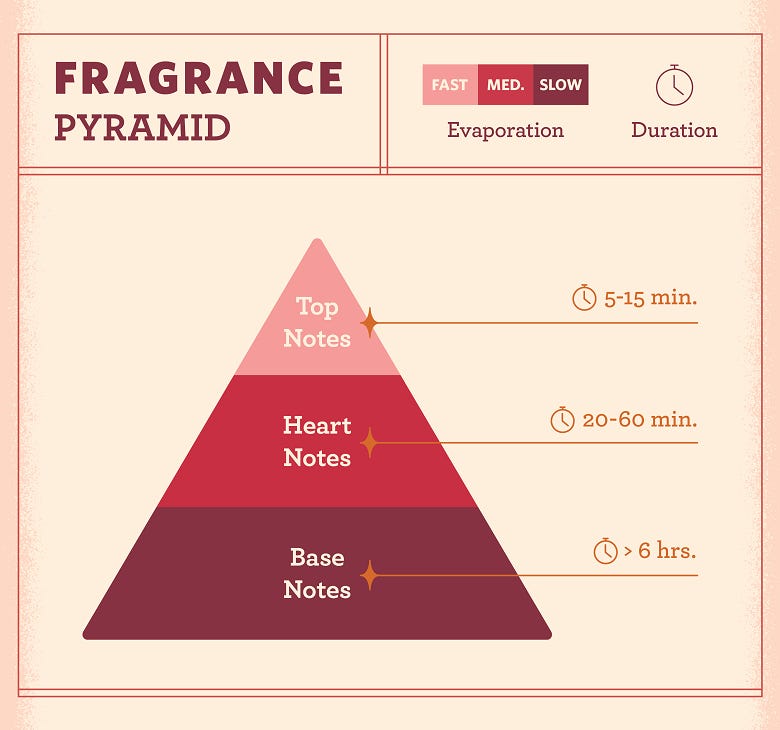
Image Source: fragrancex.com
We already discussed in one of my earlier posts that the price of the perfume is not correlated with (and certainly not causative of) the quality of the perfume. We also discussed that perfume gender is not a thing. Anyone can wear any perfume. I am particularly relieved by this, as I remember walking into the department stores, many years ago, constantly afraid that I will pick up a “ladies perfume” and the salesfolks will laugh at me. Of course, the joke’s on them. Also relieved because, gosh, how can we summarily exclude 50% of all great fragrances in the world? These days, I just wear. I don’t care about labels.
But there are more myths in this world.
1. Niche Perfumery — Originally started as a concept to exercise creative freedom and unshackling of the process from the commercial pressures, niche perfumery is now passe. I was once watching an interview of Sebastian Almairac, the founder of Parle Moi de Parfum. He flat out refused to acknowledge the idea of niche perfumery. What is niche perfumery? Niche perfumery just means the perfumers will have more freedom in their compositions, more freedom in deciding how much of a given ingredient they want in a perfume, generally somewhat unconstrained by cost. In mainstream commercial perfumery, the cost plays a major role, as does specific demands from marketing/ sales teams. Niche perfumeries became common in the 1980s, with some of the most famous ones being L’Artisan Parfumeur, Annick Goutal, Frederic Malle, and Serge Lutens. These days, “niche perfumery” has just become a self-awarded license to charge more. Where great perfumes once sold for less than 50 cents or even 30 cents per ml, someone calling themselves a niche perfumer allows them to charge $3 or $5 per ml. Or at least they think so. This is what led to a lot of shite perfumers calling themselves niche, and ruining the essence of what niche once meant.
2. Notes tree — The simple fact of perfume ingredients is that they have different characteristics. A citrus note might smell bright, may project more but will not last long. A patchouli or oakmoss or an animalic note may stay on your skin for long, but will not dissipate very much. To simplify this concept to the average consumer, the marketers founded the notes tree. They say top notes, heart notes, base notes — which are not wrong, but greatly over-simplify (in fact, dumb down) the concept of how perfumes work. During the process of learning perfumes, it is helpful to have the tree structure, but the sooner you are able to let it go (like the training wheels), the better it is for your learning and sensory experience.
3. Expiry dates — Long before I got into perfumes, I always wondered how the discount shops sold the same perfumes for much less. They were not dupes. A friend explained to me, “they are old stock, they have expired or will soon”. I had no reason not to believe it. I meticulously started checking batch codes for the one perfume I would get couple of years. This is a myth. It can both be said — that perfumes expire, and perfumes don’t expire. Let me explain. Perfumes don’t expire based on manufacturing/ bottling date. They expire based on what happens to them. Too much light? Too much heat? Too much humidity? All these are bad things for a perfume. Acute exposure will make unnoticeable changes in them. Sustained exposure will cause them to ‘turn’ — a term used to mark a shift in the scent profile of the perfume. Eventually, they will turn rancid. But none of these are based on the bottling date. There are 100-year-old perfumes that have been kept well, and there are two-year-old perfumes that can turn rancid. Simple solution — keep your perfumes in a cool, dark, dry place.
4. Cultural stereotypes — There are several stereotypes, and as with all stereotypes, there is some truth to it. American perfumes are considered clean and fresh, simple, linear, and some say optimized for top notes. French perfumes are considered layered, complex, nuanced, and optimized for base notes. Italian perfumers are bold, and nuanced. Indian perfumes over-index on longevity and price-value. Middle Eastern perfumes have Oud and nothing else to offer. Obviously, all these are debunked.
But the biggest myth of all is the relationship between you, the perfume, the perfumer and the perfume brand. This is more complex than what I can discuss in one blog post. I am planning to write a dedicated post on that topic.