Sultan Vetiver by Nishane
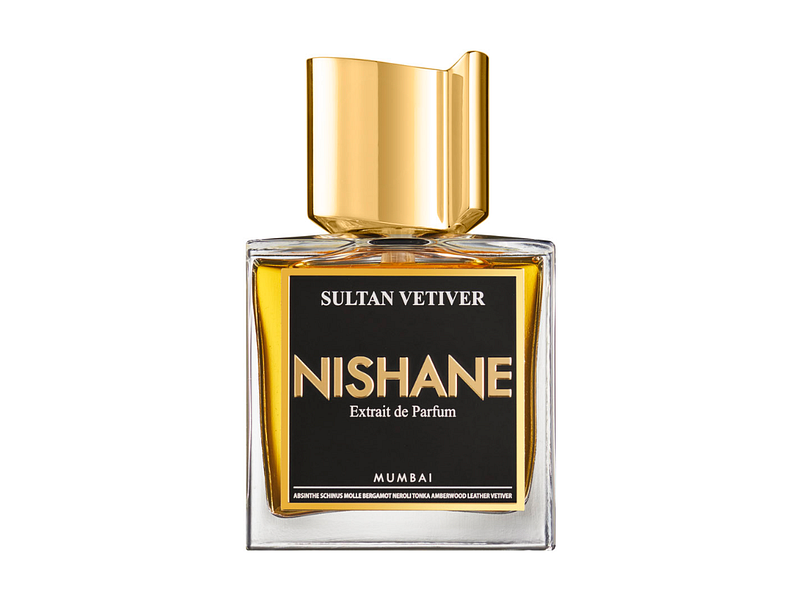
Image Credit: nishane.com
The idea of this blog is to tell the stories associated with the perfumes, but sometimes — indissoluby so — I have to tell the stories of how that perfume came into my life. This one hopefully has both. Until before I started my perfume hobby, I was a one-frag-guy i.e. I had the habit of buying one bottle, use it to the last drop, and then buy the next bottle. Did I have tastes? Preferences? Informed opinions? None. I’d just walk into a store like Macy’s and buy whatever it is they were shilling on that day. My bottle-in-rotation was getting empty and based on — I can say this now — my overall knowledge of the brand (not the perfume), I had settled on what brand to buy. If nothing, this was a step improvement for me, because for the first time, I knew what I was going to buy prior to my setting foot inside the store. As the story would turn out, I buy the bottle, end up being underwhelmed — based on what knowledge? I have no idea — and had to return it to the store.
But something weird happened at that moment — I wanted to find out what was considered “best-in-class”. So I tried to find out what was in it, and there was this thing called “vetiver”.
Vetiver literally means “cut roots” in my native tongue that is Tamil. I know vetiver as a perfume note now, but earlier during my growing up days, when a refrigerator was not a common thing, we used to store drinking water in claypots, with a generous portion of vetiver and cardamom shells/ skin floating in it. The claypot cooled the water down and the the roots and spices made them pleasant to drink. Seeing that vetiver was now a perfume ingredient, I became more curious about it and wanted to find the best vetiver fragrance there is. This is how I landed on Nishane Sultan Vetiver (along with another, as you will see).
Vetiver smells like a dank, moist root of a plant. Perfume aficionados describe it as a serious note that smells earthy, leathery, and smoky. While my experience of vetiver comes from India, this is certainly not the only kind.
Fragrantica says:
Wild vetiver can be found in India, Ceylon (Sri Lanka), and Indonesia. It grows well in tropical and subtropical climates. However, the yield of essential oil from the roots of wild vetiver is relatively small, so the plant is cultivated for this purpose. Vetiver for its oil is cultivated not only in India and Indonesia (in the middle of the last century, most of the vetiver oil was produced on the island of Java ); it is also grown in China, Madagascar, and the island of Reunion (their legendary Bourbon vetiver, so loved by many perfumers, unfortunately, is now rare), in Brazil and, most importantly, in Haiti, which has become the leading supplier of vetiver oil in the world, approximately 90% of all oil being produced in its Les Cayes region. In total, about 100 tons of vetiver essential oil are produced annually, of which Haiti accounts for about 80. The first plants appeared in Haiti in the late 30s of the last century.
Sultan Vetiver is created by Jorge Lee, who — consistent with Nishane’s standard practices — is not explicitly recognized. It has four vetiver types — Javanese, Bourbon, Haitian, and Brazilian. This is an out and out vetiver fragrance, where it is the primary/ forward note. The best way I can describe the experience is imagine there is a body of water, which you can’t smell until you dunk your face in it. Let’s say instead of water, it is a thick plume of vetiver smoke. The feeling you might get when you dunk your face in it is what Sultan Vetiver gives me.
I have tried several vetiver primary/ forward fragrances since — and some of them are really good. This includes Tom Ford, Guerlain, Roja, Frederic Malle, Creed (which I haven’t tried), Chanel and more. I even tried the purest form of extracted vetiver in the form of an attar from an Indian attar house ML Ramnarayan. But say I could not afford the price point of some of these houses, what then? I could be satisfied with buying Nishane’s Sultan Vetiver for the rest of my life (I am on my 2nd bottle), along with Lalique Encre Noire A L’Extreme which is in my opinion another highly reviewed vetiver fragrance. But if I did have more room to try vetivers, I would probably try Masque Milano Hemingway, Hermes Bel Ami Vetiver, Different Company Sel de Vetiver, Serge Lutens Vetiver Oriental, and Oriza L. Legrand Vetiver Royal Bourbon. But once again, when you have Sultan Vetiver and Encre Noire A L’Extreme, you are basically set for life.