The Wild Beauty of Animalic Notes in Perfumery
Few things capture the primal edge of scent quite like animalic notes. They hint at warmth, sensuality, and raw elegance — elements that have fascinated perfumers for centuries.
Let’s lift the mystery behind these bold ingredients.
Musk — Musk comes from a glandular secretion of a musk deer, which usually has to be killed for the gland to be extracted. Musk deers are commonly found in places like Russia, India, and some parts of China.
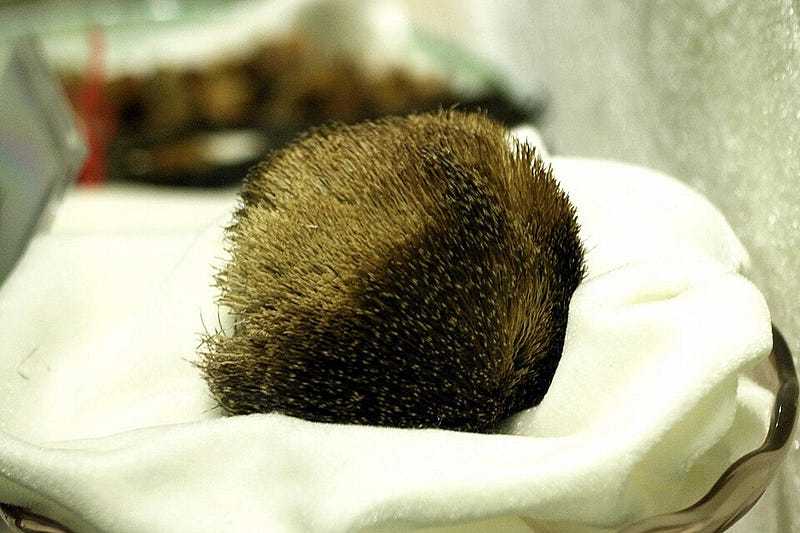
By 乌拉跨氪 — Own work, CC BY-SA 3.0
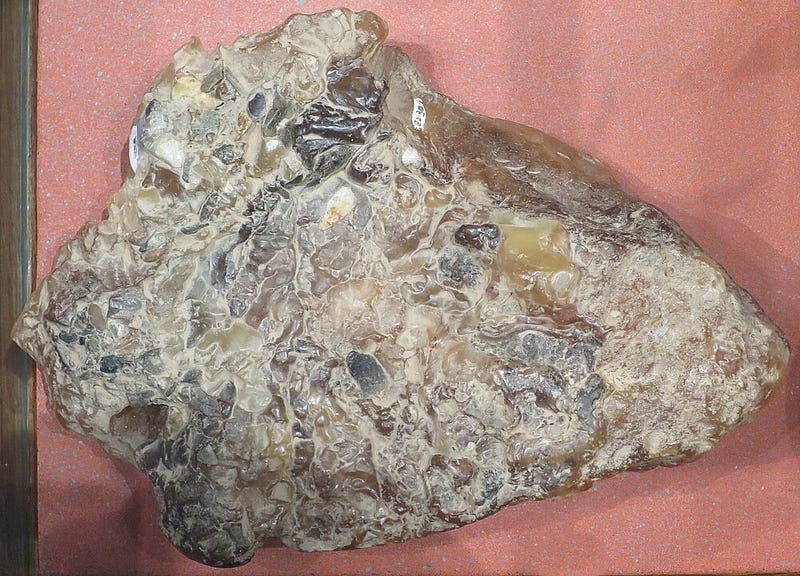
Ambergris —To keep things simple, it is either the fecal remains or regurgitated remains of a sperm whale. The whale is not harmed to secure this, in fact there is very little (if any) history on a human actually witnessing the excretion process — so much so the entire community is evenly split whether this comes through the back end or the front end. As you can see, this material is extremely fossilized by the time it washes ashore or is found by a human. Side trivia: One such block of ambergris easily fetches several tens of thousands of dollars, so you better believe when I see people go and look for these things. You could call them ambergris hunters. Ambergris literally means Grey Amber. Places like New Zealand and Oman are considered to be big recipients of these natural miracles.
Castoreum — Castoreum is similarly a secretion that comes from castor sacs found in North American and Asian beavers. Beavers are extremely common in North America, especially in Canada and the USA. They are also overpopulated, so killing them — in the grand scheme of things — is not a big deal.
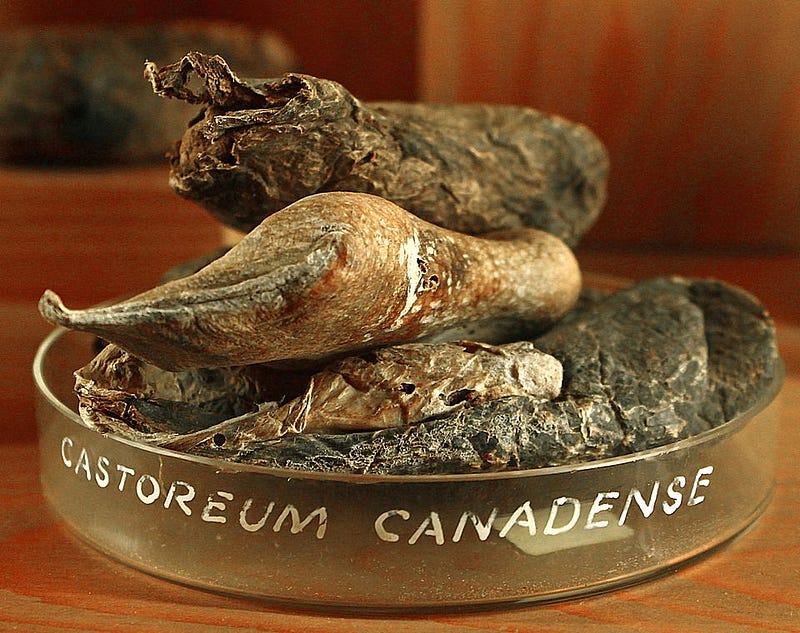
By H. Zell — Own work, CC BY-SA 3.0
Civet — Civet is a glandular secretion of a civet cat. While they are not killed, they are caged and agitated (which one could say is torture) to maximize the output on a per-animal basis. Interestingly, there is also a culinary aspect to civet. There exist people in the world who have taken a special taste to coffee beans subject through the civet cat’s digestion process, cleaned out from its fecal excrement, and then ground for making coffee. If you are interested, read on about Coffee Luwak. Pretty pricey!
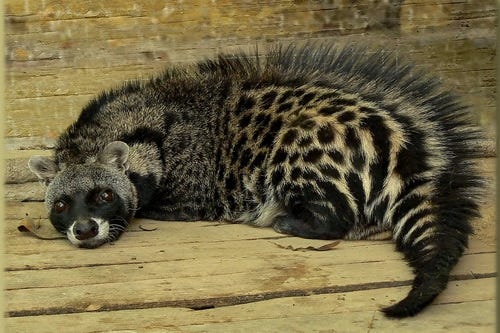
By Николай Усик / http://paradoxusik.livejournal.com/ — Own work, CC BY-SA 3.0
Hyraceum — Hyraceum is fossilized mixture of its urine and feces of the Hyrax species, which is one of the few animals that do both in the same location. Again, no animals harmed in bringing this to your favorite flacon.

By Charles J. Sharp — Own work, from Sharp Photography, sharpphotography.co.uk, CC BY-SA 4.0
Beeswax — Beeswax comes from the wax secreted by honeybees. No animals harmed.
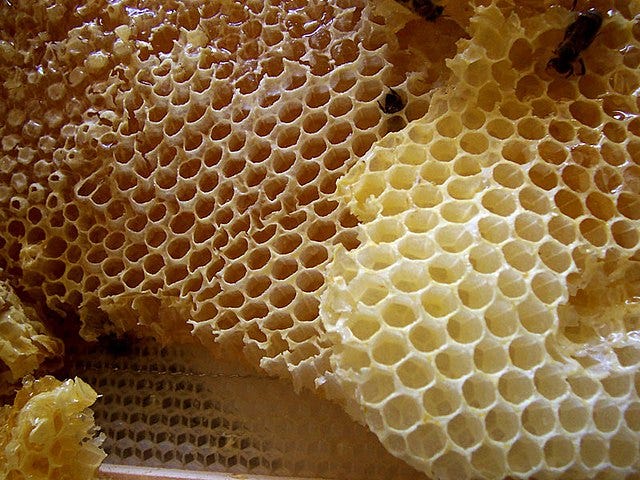
By Merdal at Turkish Wikipedia, CC BY-SA 3.0
So, as you can see, there is a spectrum here — from no harm, to torture, to outright killing. For reasons of animal cruelty, but also for reasons of skin reactions and allergies, most of these items have now been phased out. You simply could not walk into a department store and buy a perfume which has one of these. Yet, most oil houses have appreciated the aesthetic need for these scents in their perfumes and have developed synthetic equivalents of these notes and are widely used in perfumery. For example, Musk has been replaced by Ambrette Seeds (natural) and Musk Ketones (synthetic). Ambergris has been replaced by Ambroxan (s). Civetone (s) has taken over Civet. However, there are still perfumers in the world that use natural animalic notes in their perfumes. While they are banned by perfume industry self-regulators such as IFRA, they are not illegal at the point of manufacture or point of sale, as long as they are not illegal at the point of capture. These perfumers are usually very high-end houses that skip the entire distribution network associated with mainstream perfumes, and sell directly to consumers — often with disclaimers.
Why bother using animalic notes? There may be multiple explanations to this — not sure which is true or more true than others. #1 Animalic notes have a pheromonal response, however the use of animal pheromones in humans to elicit a biological response largely been debunked. But the belief may have been in vogue at the time. #2 There was a time when it was taboo for men to wear perfumes. Since all women wear wearing the florals, this may have been a way for men to differentiate themselves. #3 Animalic notes do genuinely help cut scent profiles that may otherwise be overly floral or overly sweet or green etc. #4 Animalic notes add to the complexity and depth of a perfume #5 Animalic notes are costly to procure — so this may have been seen as a sign of wealth. But the most plausible and pragmatic reason — the reason I believe is most true — is that animalic notes serve as a fixative and extend the shelf life of a perfume as well as longevity of a perfume application.
Animalic senses can be evoked by completely natural and botanical sources also. Because animals don’t practice hygiene in the way humans do, we tend to group the scent of animal skin, animal feces, animal urine, and other bodily smells. But the reality is such vibes can be created with unrefined honey absolutes, Jasmine, Tuberose, and Neroli. At a molecular level, these whiteflowers contain traces of Skatole and Indole, which is the same molecule that gives away the distinctive fecal/ pissy smell.
But the reality is animalic notes — whether from animals or not — are used in such trace quantities, it is usually done to accentuate the otherwise positive vibe you get from a perfume. Kind of like adding sea salt to a chocolate bar. Animalic notes also generally (there are many exceptions to this) occur in the base notes, which the average shopping-mall-going-buyer does not know/ care about. The perfumes marketed to these shopping-mall-going-buyers are also the ‘safe’ ones, so they do not include such notes. Put in an over-generalized way, the only people getting animalic notes in their perfumes are the people who went looking for it.
So if we remove the stigma around animalic notes, if you just perceived them as another note, what do you normally perceive? Of course, in order to accept what follows, you truly have to remove the stigma from your mind.
Musk — Powdery, warm, slightly sweet, chocolate-y Ambergris — Warm, marine, slightly sweet Civet — Pissy/ fecal, dries down to a musk-like effect Castoreum — Leathery, smoky, rubbery or fruity Hyraceum — Leathery, earthy, pissy